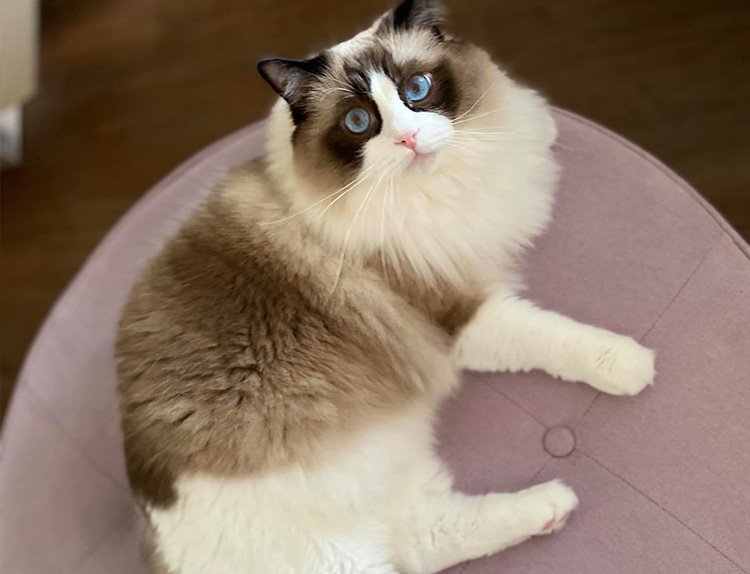
Delve into the bi-color pattern of Ragdoll cats: a captivating blend of white paired with another hue, distinguished by an inverted ‘V’ on the forehead and contrasting body markings. Discover the intricacies and allure of this distinct Ragdoll variant.
The Bi-Color Pattern in Ragdoll Cats: An Alluring Canvas of Contrasts
Ragdoll cats, renowned for their placid temperament and silken coats, come in an array of striking patterns. Among these patterns, the bi-color variant stands out as one of the most visually captivating. Let’s dive deeper into understanding the allure and intricacies of the bi-color pattern in Ragdoll cats.
1. What Exactly is the Bi-Color Pattern?
The term “bi-color” denotes two primary colors. In the world of Ragdoll cats, this typically refers to a combination of white and another color (often blue, lilac, chocolate, or seal). The distribution of these colors is not random, and certain hallmarks distinguish the bi-color Ragdoll from other patterns.
2. Recognizing a Bi-Color Ragdoll: Key Features
- Inverted ‘V’ on the Forehead: The most distinctive mark of a bi-color Ragdoll is the white inverted ‘V’ on its forehead. This ‘V’ usually extends over the cat’s muzzle, giving it a mask-like appearance.
- White Legs: All four legs of a bi-color Ragdoll are white, resembling stylish boots.
- White Belly and Chest: The chest, belly, and ruff will be predominantly white, offering a beautiful contrast against the darker color on the back and sides.
- Colored Back: The back remains colored, continuing from the tail’s base to the nape of the neck.
3. How Does the Bi-Color Pattern Develop?
Like other coat patterns and colors in cats, the bi-color pattern in Ragdolls is a result of genetics. A combination of genes inherited from both parents determines whether a kitten will exhibit this pattern. It’s fascinating to note that kittens are born entirely white and gradually develop their colors and patterns over a few weeks to months.
4. Bi-Color Ragdoll Variations
While the basic features remain consistent, there can be slight variations based on the primary color paired with white. For instance:
- Seal Bi-Color: This variation has a rich, deep brown (seal) color juxtaposed with white.
- Blue Bi-Color: A softer grayish-blue color mixed with white defines the Blue Bi-Color Ragdoll.
- Lilac and Chocolate Bi-Colors: These are rarer, with the lilac presenting a pinkish-gray tone and the chocolate being a warm, milk-chocolate hue.
5. Personality and Temperament
Though coat patterns don’t directly influence a cat’s temperament, it’s worth noting that Ragdolls, in general, are often described as “dog-like” in their loyalty and affection. They are sociable, enjoy the company of their humans, and even have a penchant for following them around!
6. Caring for Your Bi-Color Ragdoll
Ragdolls possess semi-longhair fur that’s plush and bunny-like. Regular grooming is recommended, particularly for bi-colors, to keep their white fur pristine and free from tangles.
Conclusion
The bi-color pattern in Ragdoll cats presents a visually arresting combination of colors that accentuates the breed’s elegance and poise. If you’re considering welcoming one of these feline beauties into your home, you’ll not only be greeted by their striking appearance but also their warm, affectionate nature. Truly, bi-color Ragdolls are a testament to the adage that beauty is more than fur deep.
